levelbuild Logistics for project cargo · Design partner programme 2026

Every project transport is one of a kind.
So is every process – and that is the problem.

Reduce complexity. Build clarity. Gain sovereignty.

Permits, resources, change orders, damage, project knowledge live in ten channels today. levelbuild Logistics brings these five fields onto one platform – as an operational layer on top of TMS, ERP and DMS, without rip-and-replace.

A bracket, not another silo levelbuild is the bracket across your existing TMS, ERP, DMS and Excel worlds. End-to-end data without system breaks — and without rip-and-replace.
Configured, not coded Freedom of movement inside a standard solution. No custom software per customer — the same platform, configured to your processes.
What goes wrong today

Three symptoms that are never the crane’s fault.

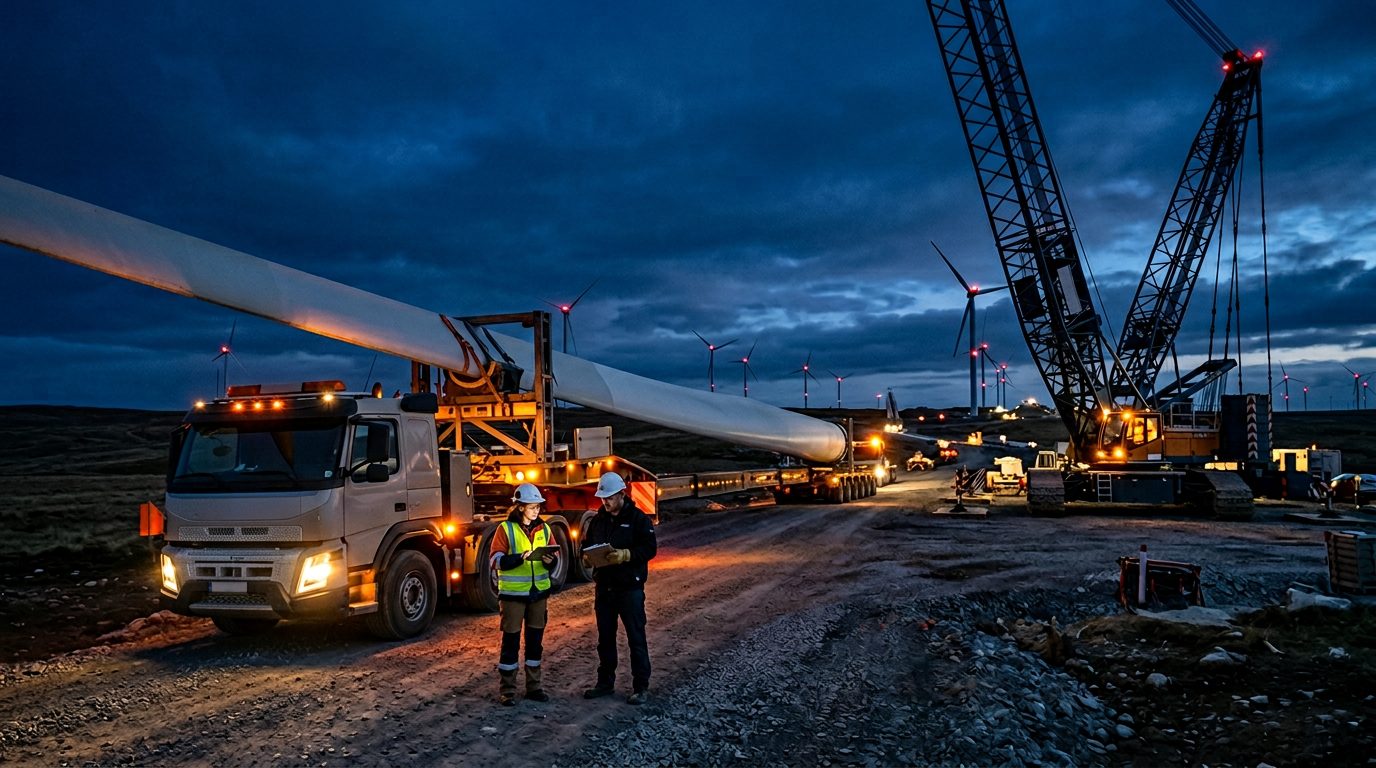
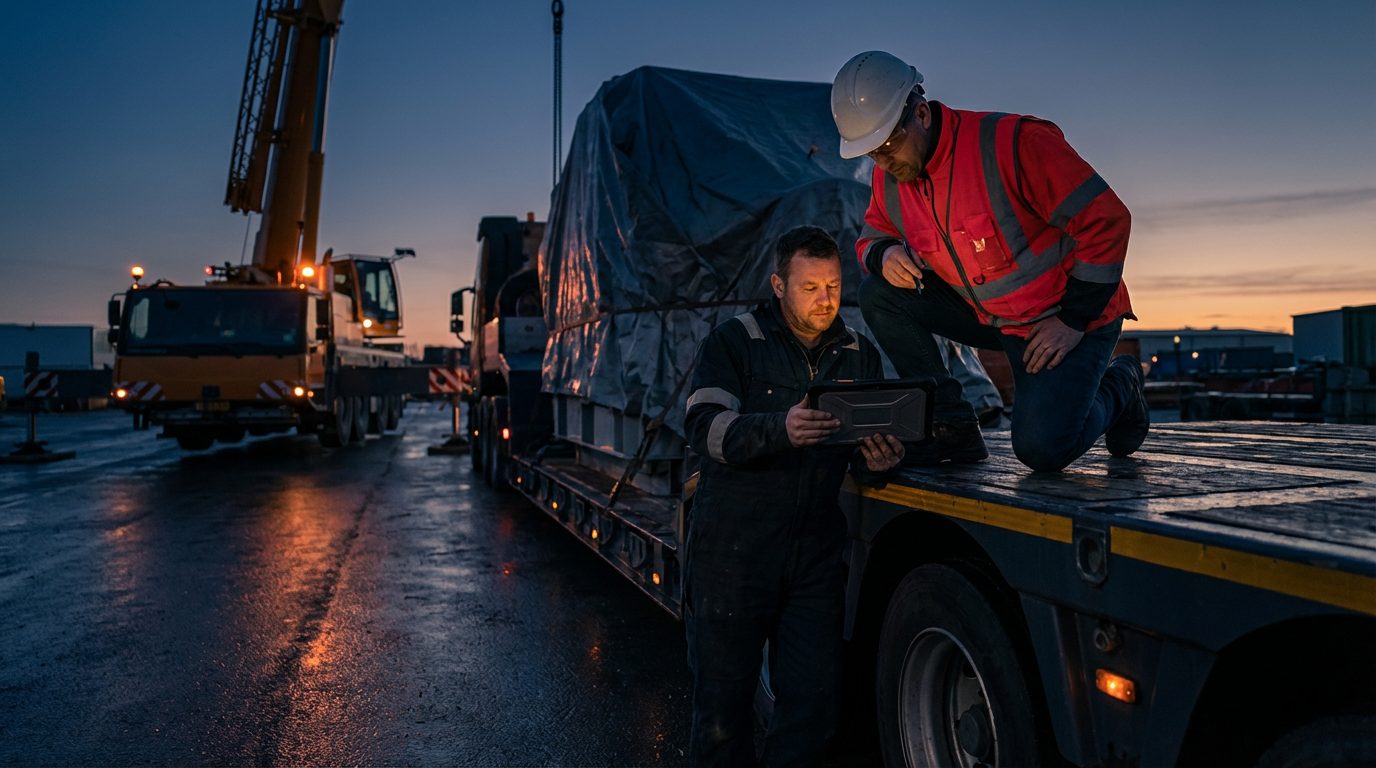
The transport itself is rarely the problem – it is the coordination around it. Fragmented across ten channels, with no shared view for dispatch, escort, crane and customer. Three examples every heavy-lift dispatcher knows.

The change order that never gets written

Waiting time at the lifting point, a second crane slot, a road closure – extra work happens on site and gets passed on via WhatsApp. Two weeks later the evidence is missing: half the change orders are never raised, the other half rejected without proof.

Answer: use case 01 →

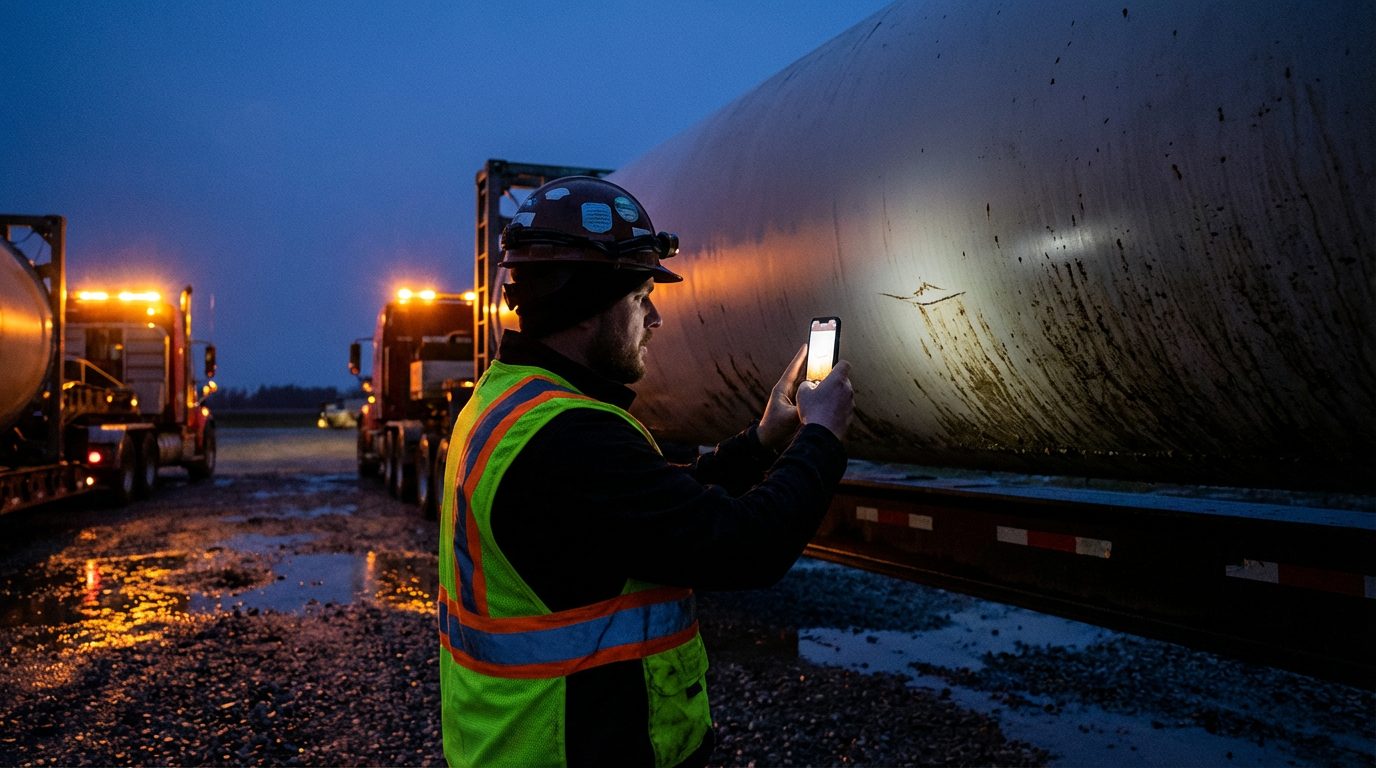
Damage documentation on phone photos

Transport damage? A smartphone photo, an e-mail to the dispatcher, eventually it reaches the insurer. Audit readiness: a matter of luck.

Answer: use case 02 →

Project knowledge lives in inboxes

Plans, permits, conditions – scattered across individual employees’ Outlook folders. The next comparable transport gets planned from zero again.

Answer: use case 03 →

Sounds like your day-to-day? 30 min discovery call – we show on one of your transports how levelbuild Logistics resolves this.

Book a discovery →
Core use cases · project cargo

Three prioritised levers. With clear KPIs.

Three core use cases that cost the most money and time in project cargo today – direct answers to the three symptoms above.

0
Start
✔
4–8 weeks
First pilot productive
✓
6–9 months
Break-even (typical)
Platform spectrum

Five classes of information – permits, resources, change orders, damage, project knowledge – run on the same platform.

Permit & conditions management (VEMAGS)

A structured permit file per order – application, conditions, correspondence, deadlines. Conditions become verifiable checks with an owner and a due date.

Resource synchronisation

A shared order timeline with role-specific views for escort, crane, assembly, customer – changes trigger notifications along the dependency chain.

Change order via app

Trigger: extra work happens on site – and is forgotten later.

Lever
+3–5% revenue · no extra office workload

Heute

The driver reports waiting time, a second crane slot or restricted access via WhatsApp to the dispatcher. Two weeks later the dispatcher only half remembers. One half of the change orders is never raised – the other half rejected by the customer for lack of proof.

With levelbuild Logistics

The driver opens the app on site, picks the category (waiting time / additional lift / aggravated access), photographs the situation and has site management sign on the tablet. The change order lands automatically in the project file and travels to the office as a draft invoice – with evidence, not from memory.

Live from the system
Live from the system – web view Live from the system – mobile

Mobile capture from live construction operations (web + mobile). Category, photo, status and role-bound approval – structured instead of a chat message. For project cargo the same platform is configured to change-order categories (waiting time / additional lift / aggravated access), with digital customer signature on site and automatic filing in the project file.

Why no existing system category covers this

A TMS knows orders, but not semi-formal extra work. An ERP manages invoices, but does not draft them on site. Excel and WhatsApp document – but without signature, without order context, without an archive.

Damage & deviation documentation

Trigger: damage occurs at the loading point – who records what, and when?

Metric
2–3× faster damage records · 100% mobile

Heute

Photos on the driver’s phone, notes on the delivery slip, a WhatsApp description to dispatch. The documents surface days later in an e-mail – or not at all. Evidential value and insurance reimbursement suffer; customer disputes become a ritual.

Mit levelbuild Logistics

A structured damage form on the smartphone – with mandatory fields, photos, geo stamp, signature. Automatically assigned to the right order file. Insurer, customer and dispatch see the same record with the same timestamp.

Live from the system
Live from the system – web view Live from the system – mobile

Damage pins on an object schematic, web and mobile. 16 events on a container schematic – each with photo, status (recorded / pending / resolved), cost estimate and surveyor flag. For project cargo the container becomes a transport schematic: rotor blade, transformer or cargo frame – damage documented at the source, audit-ready in the file.

Why no existing system category covers this

A DMS stores what is put into it – it does not enforce capture at the source. A generic form tool does not know the order. The gap sits between incident and file.

Project file & reuse

Trigger: a similar transport returns in 6 months – who remembers the permit conditions?

Metric
−50% setup time for follow-up orders

Heute

Every project is an island. Plans, permits, lessons learned live in individual employees’ Outlook folders. When someone leaves, knowledge leaves with them. A comparable transport gets planned from zero again.

Mit levelbuild Logistics

Every order is created in a structured project file: cargo, route, conditions, resources, documents, communication. Similar orders are suggested as templates. Knowledge stays in the company, not in an inbox.

Live from the system
Live from the system – web view Live from the system – mobile

Project file with 11 plans (web) and project overview (mobile). All documents, plans, approvals and communication central per record – instead of Outlook folders. For project cargo this becomes the transport file: cargo, route, conditions, resources – reusable as a template when the next similar order comes in.

Why no existing system category covers this

An ERP archives commercially, not operationally. A DMS knows folders, not order patterns. A wiki is maintained voluntarily – and therefore unreliable. Project knowledge needs a home tied to the process.

What we bring from construction

Grown in construction. Configured for project cargo.

levelbuild grew up in construction. With Mainka, Jaeger, Spitzke, Bickhardt and Baierl + Demmelhuber we learned what a platform must deliver when it reaches blue-collar teams in the field, maps many locations consistently and brings home-grown speciality tools together. We are now configuring the same engine for project cargo, heavy lift and abnormal transport — together with design partners from your industry.

Five construction customers in productive use · Siemens Energy on the product advisory board. References on levelbuild.com (German) →

Mainka Bau — reference
750 employees · 8 locations · owner-managed · core software RIB
For us, levelbuild is the spider in the web: the platform pulls data together from many different tools and condenses it into something we can actually work with.
Jens Pahnreck
Jens Pahnreck
Head of Organisational Development, Mainka Bau
View reference (German) ↗
Jaeger Gruppe — reference
2,600 employees · 80 companies · 50+ locations · decentralised organisation
This freedom of movement inside a standard solution can be implemented very quickly and easily thanks to a no-code platform.
Dr. Sebastian Schumacher
Head of Organisational Development, Jaeger Gruppe
View reference (German) ↗
More voices from the product advisory board

“There are plenty of tools that are good at individual topics. But levelbuild’s role as the ‘bracket’ is the decisive thing for us. From the construction site through documentation to internal processes, controlling and BI tools.”

Georg Michael Geier
Georg Michael GeierManaging Director, Baierl Demmelhuber

“From HR applications through dispatch and payroll to the construction file: levelbuild will be our standardised, data-optimised, connected, secure and above all efficient working environment for process-supporting application systems.”

Dr.-Ing. Kirsten Andernach
Dr.-Ing. Kirsten AndernachDirector Processes & Strategy, SPITZKE SE

“levelbuild is a very decent, clear and fair partner. You are taken seriously and advised honestly: what works, what does not, and what you had better leave alone.”

Wolfgang Götz
Wolfgang GötzManaging Director, i2nom GmbH
70+ employees · profitable
Owner-managed,
since 2023
3+ years
Platform productive
in construction & infrastructure
20,000+
Daily users
on sites & in back offices
One platform. Several worlds.

Variable processes. Shared platform.

Tested in construction, configurable for project cargo – not newly developed. The segmentation into wind power, heavy lift and industrial assembly is not a future vision but the same mechanics that carry building construction, civil engineering and infrastructure today.

Productive in construction today
Building construction

Acceptances, defect management, VOB conditions, trade coordination.

Civil engineering

Measurements, soil classes, shift logs, change-order capture at the point of installation.

Infrastructure

Closure windows, rail conditions, coordination duties towards third parties.

levelbuild Logistics
Shared platform

Roles, mobile app, condition checks, audit trail, integrations. Configured per world – not rebuilt.

Construction Project cargo
Configured for project cargo tomorrow
Wind power logistics

Component handover at the wind farm, condition capture for rotor blades / transformers, wind farm file for repeat transports.

Heavy lift & project cargo

VEMAGS conditions as verifiable checks, escort (BF3) assignment, cargo-securing records, permit file per transport.

Industrial assembly & crane

Crane slot sync, HSE briefing before deployment, qualification matrix with deadline alerts.

Concretely: a civil engineering customer uses the same condition check today that a wind power logistics provider will configure for VEMAGS conditions tomorrow. The same mobile form that documents defects on the construction site captures transport damage on a rotor blade at the wind farm. Different vocabulary, same mechanism – no custom development, no speciality software per segment.

Design partner programme 2026

Not a beta test. A pilot with a clear exit option.

Five partners, not a hundred licences. We are looking for a network of co-creators, not a customer list – the conviction being: when different perspectives converge on one platform, the result is not industry software but a mechanic with general validity. That is exactly what made levelbuild in construction what it is today.

We are launching levelbuild Logistics for project cargo with five design partners who take the first productive step together with us – not on a slide, but on a real transport. One prioritised use case, four to eight weeks to the pilot, and the platform underneath has been running in construction for years.

What you get as a design partner: the configuration is built with you, not bought for you. In return: preferential terms in productive operation, a direct line to our product team, and the right to shape the vertical standard everyone after you will adopt.

From construction – now for project cargo.

  • 1
    Pilot productive in 4–8 weeks

    One prioritised use case – e.g. change order via app, VEMAGS file or damage documentation – goes live on a real running transport. No sandbox PoC.

  • 2
    Clear exit option

    Fixed scope, fixed duration, fixed go/no-go review after the pilot. No multi-year implementation debt, no hidden lock-in.

  • 3
    Preferential terms in productive operation

    Design partners benefit permanently on licence, rollout and operations – in return for the configuration work that lets the project cargo standard come into being in the first place.

  • 4
    Direct decision-maker line to the product team

    No support ticket funnel. Two weekly touchpoints with product & engineering, a fixed duo of contacts covering the construction and logistics perspectives.

  • 5
    Fit profile

    Owner-operators with their own fleet / cranes / SPMT, 50–500 employees, recurring project transports (wind power, transformers, industrial components). Decision with the MD / COO – not with an 18-month committee.

Next step

30 minutes. One concrete transport. No pitch deck.

Bring a current transport – one that hurts today or will hurt tomorrow. We show live how the construction reference maps this case and where levelbuild Logistics comes in for project cargo. At the end you will know whether a pilot makes sense. Or not.

Christopher Arndt · levelbuild · christopher.arndt@levelbuild.com · reply within 24h.

Christopher Arndt, COO levelbuild

In construction we built levelbuild with five partner companies that work with it every day. For project cargo we are looking for five entrepreneurs to walk the same path with us – not as customers of a finished product, but as co-creators.

Christopher ArndtCOO levelbuild

Book an appointment directly

30-minute discovery – video or phone. Pick a window that suits you.

Calendar by Calendly

Loading the widget retrieves content from calendly.com (Calendly LLC, USA). This sets cookies and transfers technical connection data – including IP address and browser identifier – to Calendly. Details in our privacy policy.


Prefer to write an e-mail
Frequently asked questions

Platform instead of silo tools.
And what that means in practice.

The most important question first: levelbuild Logistics is not a replacement for your existing systems. No rip-and-replace. No migration. It is an operational layer that bundles the five classes of information – permits, resources, change orders, damage, project knowledge – across TMS, ERP and DMS.

Do we have to replace our TMS, ERP or DMS?

No. levelbuild Logistics replaces none of your existing systems.

levelbuild Logistics is an operational coordination layer that sits on top of your TMS (own vehicles, internal dispatch), ERP (invoicing, financials) and DMS (document archive). Exactly the five classes of information that get lost between these systems today – permits, external resources, change orders, damage cases and project knowledge – are bundled by levelbuild Logistics into one truth for dispatch, customer and back office.

No rip-and-replace. No migration. No downtime.

Project/order file
structured
Mobile forms
at the point of work
Workflow & conditions
verifiable
levelbuild Logistics
levelbuild platform

Shared foundation: roles, integrations (TMS/ERP/DMS), mobile app, audit trail – proven in construction.

What is already productive in construction?

The construction platform comprises more than 80 productive modules. A selection – all equally usable in the logistics world:

HSE & safety Project & order files Mobile forms Roles & subcontractors Workflow & conditions Reporting & analytics

These and further building blocks have been running productively at mid-sized construction companies for years. For project cargo they are configured, not rebuilt.

What does levelbuild Logistics do differently from a TMS or a project management tool?

A TMS synchronises own vehicles and internal dispatch – but does not know third parties’ external resources. A project management tool plans dates but has no logistics taxonomy. Messengers transmit messages, but no order context.

levelbuild Logistics is not an alternative to these tools – it is the missing layer that coordinates project cargo information across them and ties it to an order.

How does the platform concept work in practice?

levelbuild Logistics is based on a no-code platform from the construction industry. For every use case (permits, resources, change orders, damage, knowledge) there is a configurable module with data model, workflow and roles.

You start with the use case that hurts most today and expand step by step. Every configuration remains yours – no custom code, no consultant dependency, no multi-year implementation projects.

01

Quotation & costing

Building blocks instead of blank forms

02

Permits

VEMAGS, conditions, status central

03

Dispatch

Escort, crane, assembly in sync

04

Transport & change order

Capture deviations on site

05

Damage & deviation

Structured, audit-ready

06

Project file

Lessons learned, reusable

Every station stays connected – no data breaks between roles or systems. One truth for dispatch, customer and back office.
What about IT security, hosting and data sovereignty?

Hosting in Germany / EU. Multi-tenant model with hard data isolation. ISO 27001, TISAX orientation, BSI baseline protection.

Open REST APIs, webhooks and SFTP for integrations — no proprietary lock-in. Documented AI models with EU inference; customer data does not flow into provider training.

Audit trail, export and offboarding capability. SLA and release cadence on request. For a technical evaluation with our CTO please request an appointment →

How quickly is levelbuild Logistics ready to use at our company?

Use-case-based instead of big bang. Typically: one use case productive in the first quarter, more to follow.

Because levelbuild Logistics is a layer on top of your existing system landscape and forces no migration of existing data, the classic rollout risks of an ERP or TMS project do not apply.

  • 4–8 weeks to the first productive pilot – not 12–24 months.
  • Integrates with existing TMS, ERP and DMS systems – no rip-and-replace.
  • Reusable building blocks – what we build cleanly once is ready for further processes on the same platform.
  • Your process, not standard software – we build what you need operationally. Done when it fits.
What does a design partner pilot cost?

No licence upfront. We pilot together on a real project transport.

You contribute time and domain expertise, we build the concrete use case and evaluate with you. Only after a successful pilot do we jointly decide on the commercial continuation.

What happens if the pilot fails?

No lock-in. Your data stays your data and can be exported at any time.

We at levelbuild learn what does not work for the next iteration. Your existing systems are untouched – there is nothing to unwind.

Why levelbuild?

We are a no-code platform from the construction industry that has passed its operational stress test with construction companies.

Heavy lift and project cargo are the logical extension: every large construction project depends on project transports. We know the taxonomy, the supply chains and the operational pain points from the neighbouring industry and translate them into levelbuild Logistics.

Anything still open? Sort it out directly in the discovery →